
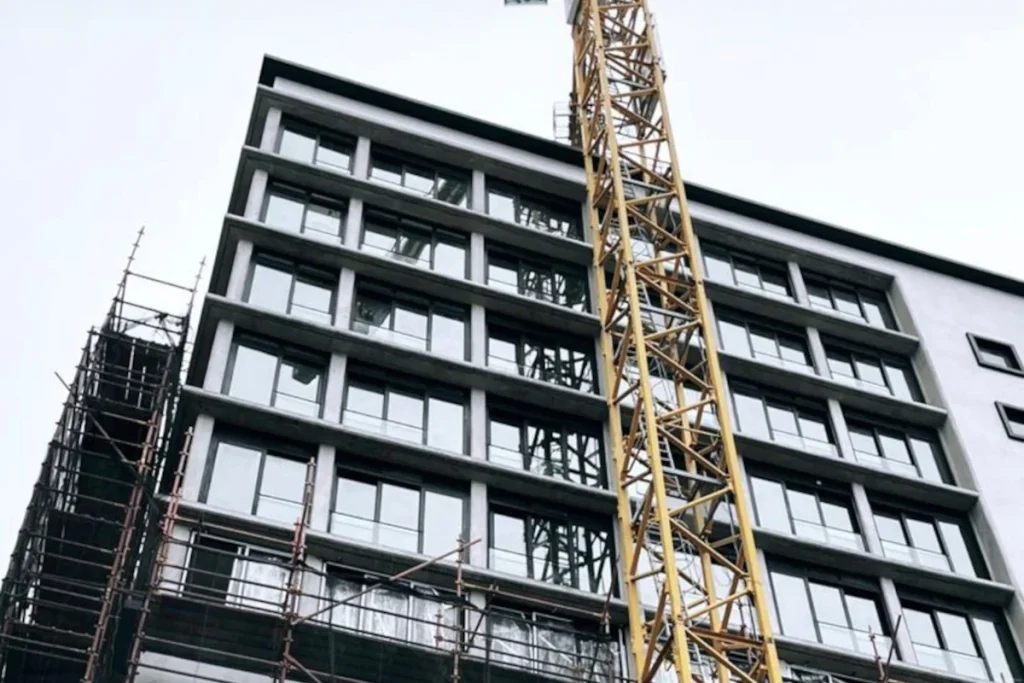
As the world searches for greener building materials and more sustainable construction methods, South Africa has quietly achieved a remarkable milestone. Rising above the streets of Cape Town is the world’s tallest building constructed using hempcrete, a 12-storey development commonly known as the Hemp Hotel. More than just another eco-friendly building, it represents a significant step forward for industrial hemp, sustainable architecture, and the future of construction across Africa.
The project has placed South Africa firmly on the global map of hemp innovation, demonstrating that industrial hemp is no longer just an agricultural crop—it is becoming a serious building material capable of transforming modern cities.
The Visionaries Behind the Hemp Hotel
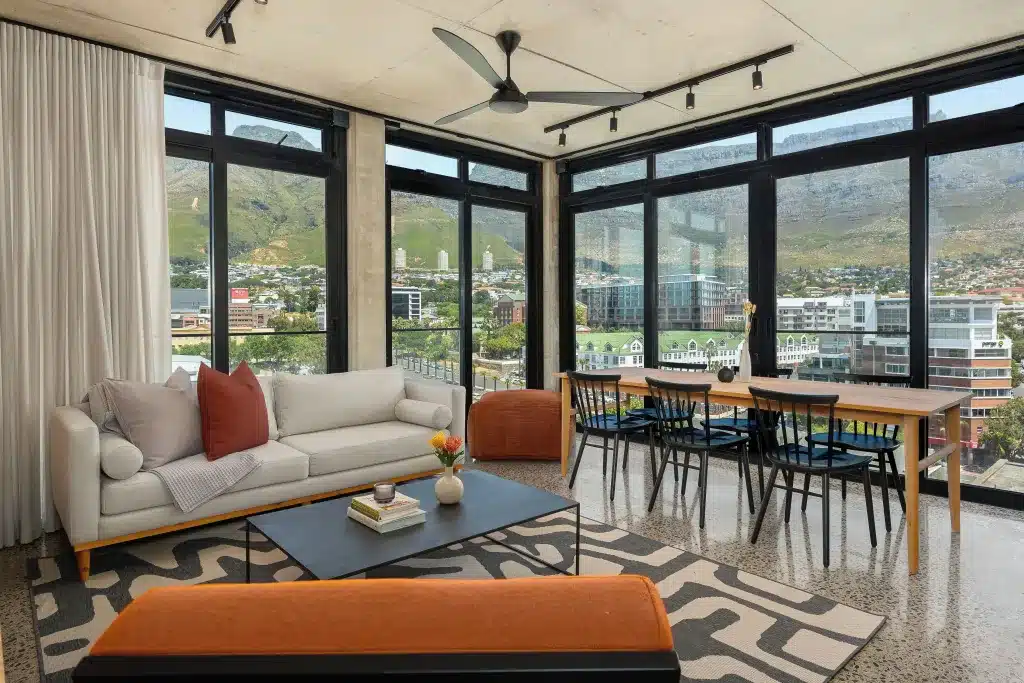
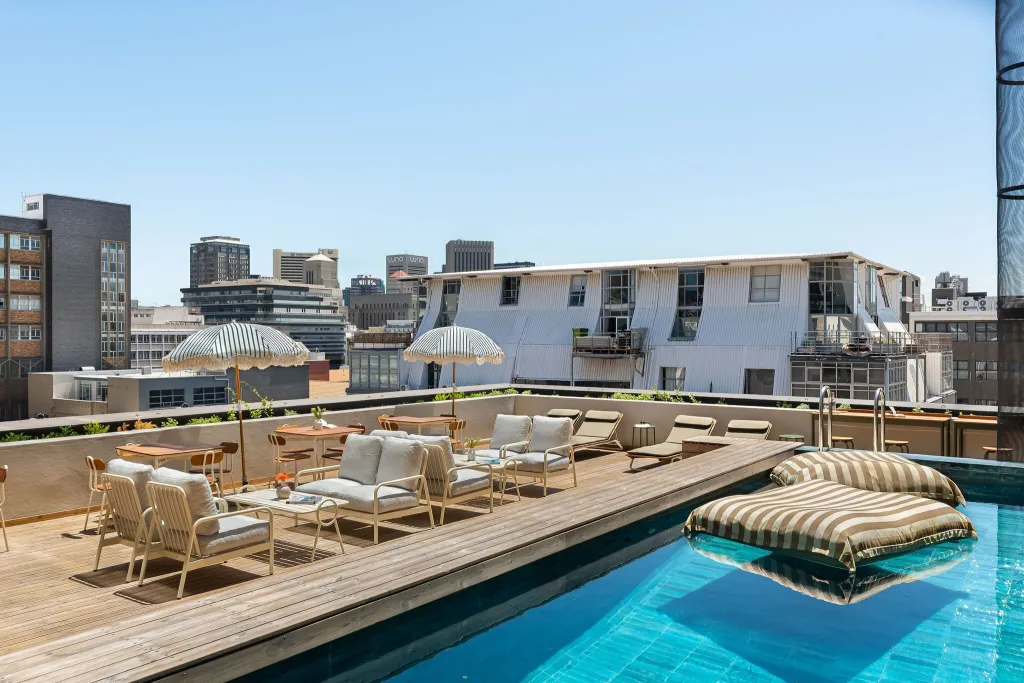
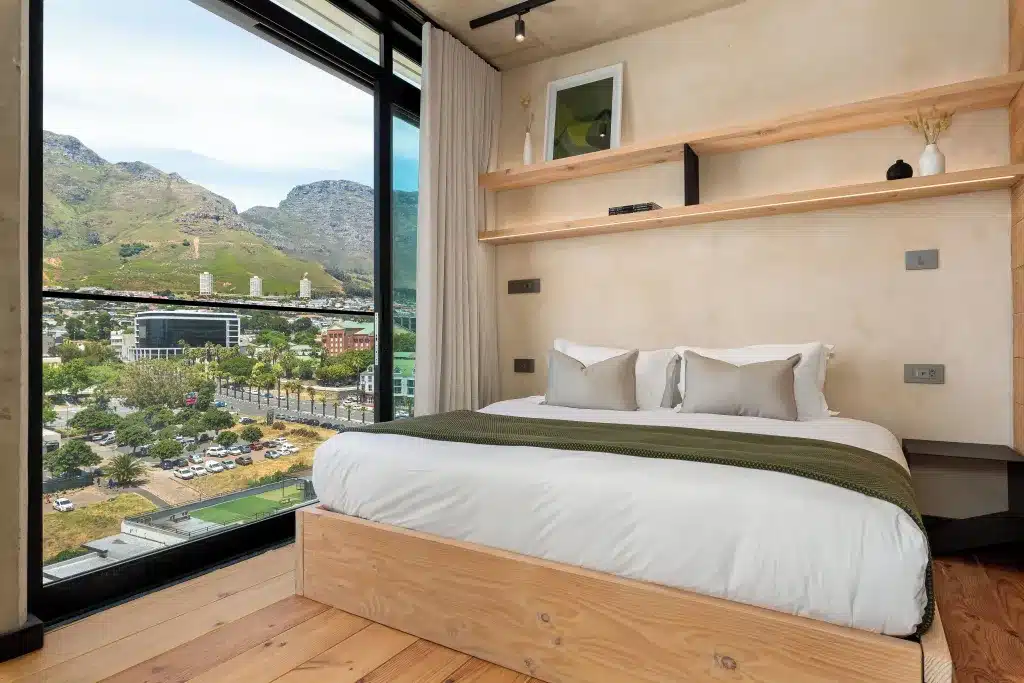
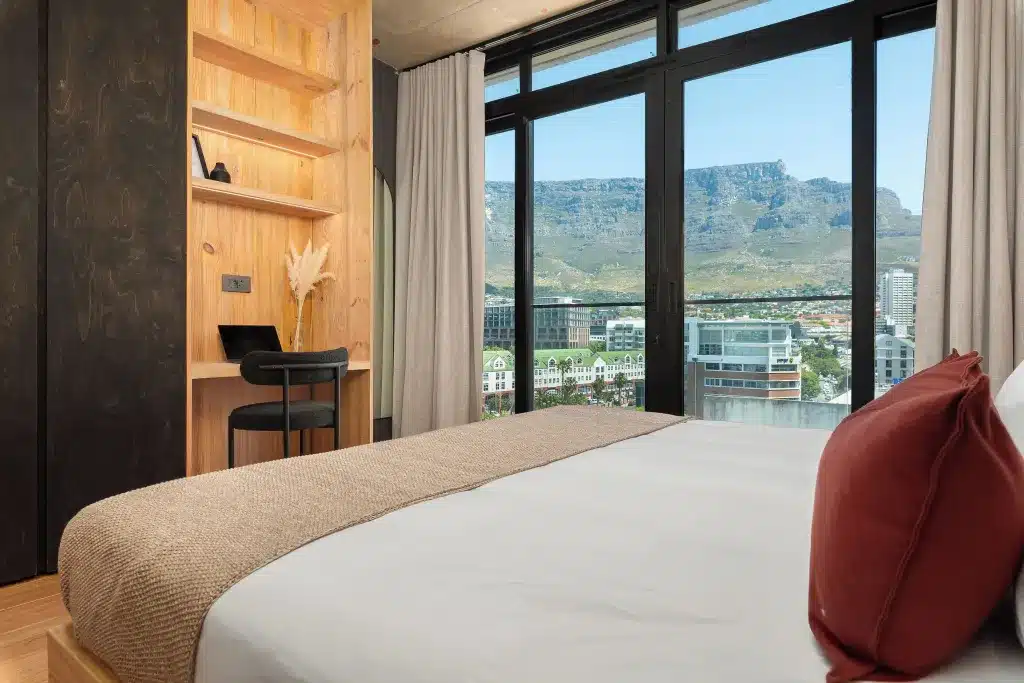
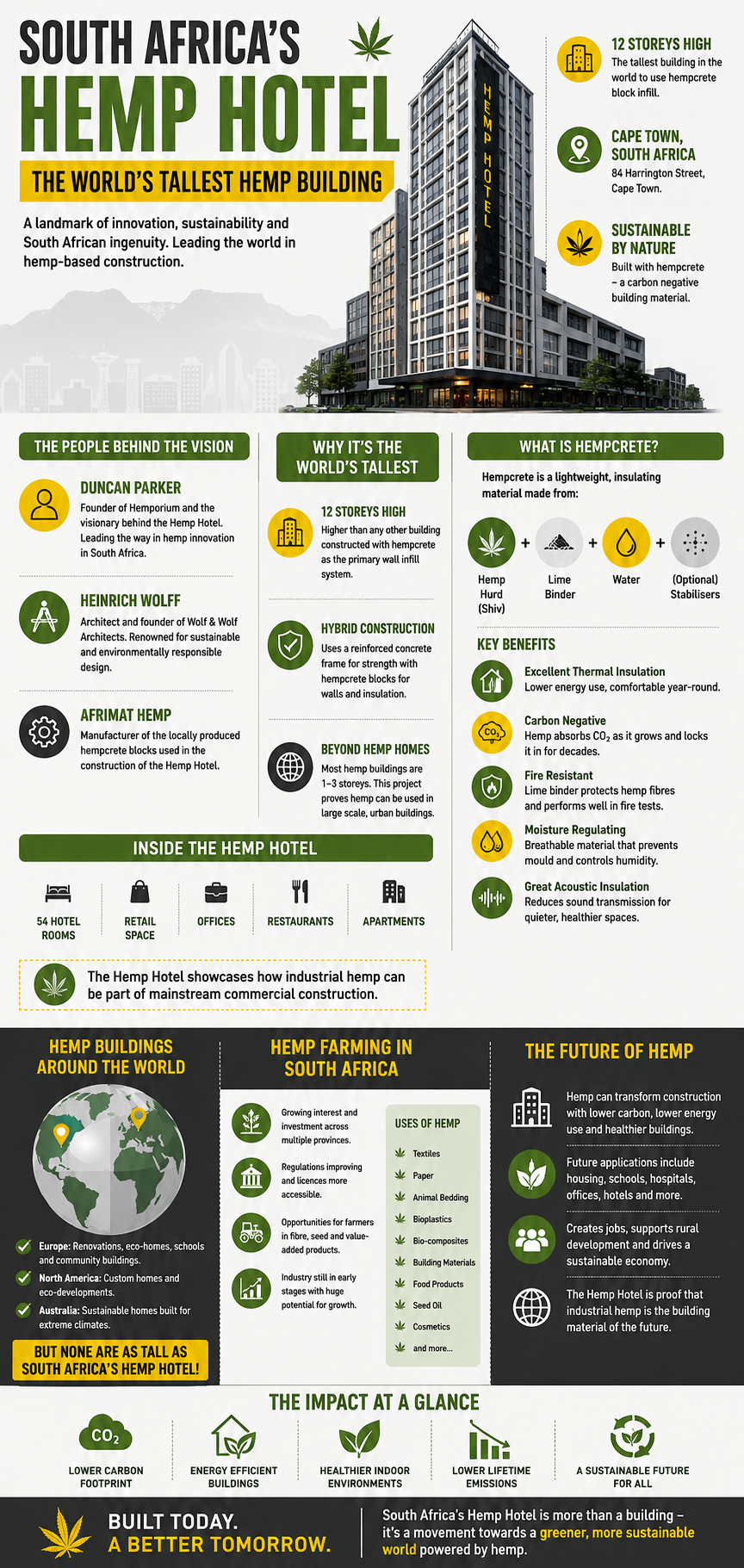
The Hemp Hotel is located at 84 Harrington Street in Cape Town, where an ageing commercial building has been transformed into a modern mixed-use development featuring approximately 54 hotel rooms, retail space, offices, restaurants, and apartments.
The project was initiated by Duncan Parker, founder of Hemporium, South Africa’s leading hemp products company. Parker’s vision extended beyond creating another hotel; he wanted to prove that industrial hemp could become a mainstream construction material capable of replacing traditional masonry in many applications.
The architectural design was led by internationally respected architect Heinrich Wolff of Wolf & Wolf Architects, a firm recognised for its commitment to environmentally responsible architecture. Their design integrates sustainability with contemporary urban living, creating one of the most significant hemp construction projects ever completed.
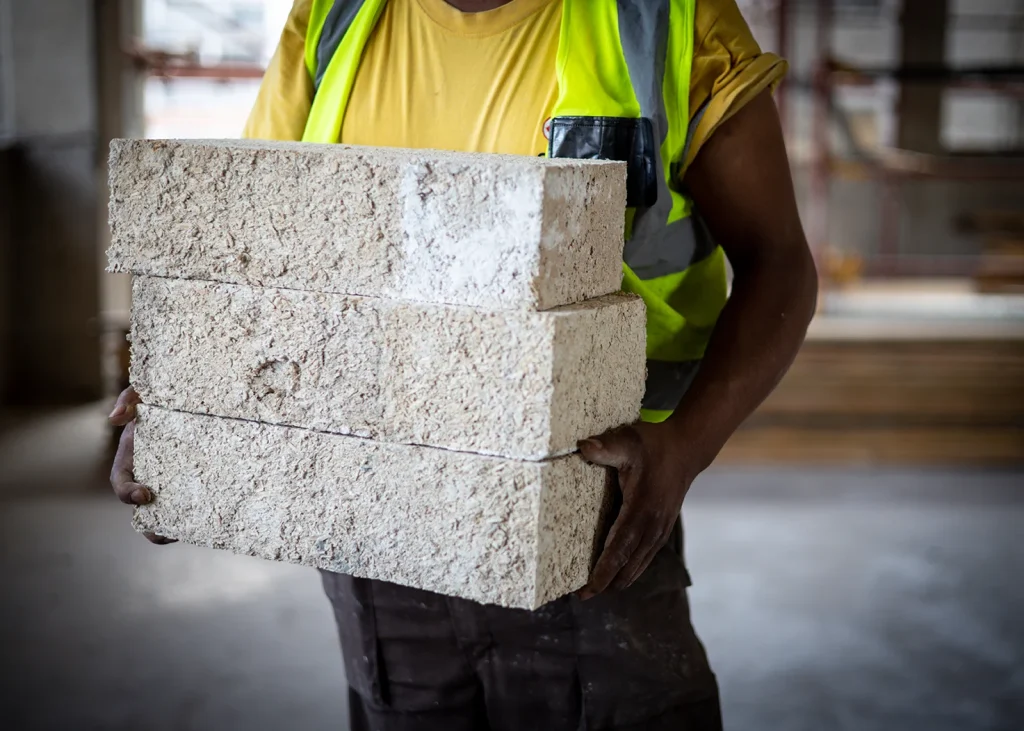
The hemp construction materials were manufactured by Afrimat Hemp, which developed locally produced hempcrete blocks specifically for the project. This collaboration between architecture, engineering and South African manufacturing showcases what is possible when innovation meets sustainability.
Why It Is the World’s Tallest Hemp Building
While hemp houses have existed for decades, most hemp structures worldwide are limited to:
- Single-storey family homes
- Two or three-storey residential buildings
- Eco-lodges
- Small commercial offices
- Rural accommodation
The Cape Town Hemp Hotel is different.
Standing 12 storeys high, it is currently recognised as the tallest building in the world to incorporate hempcrete blocks as its primary wall infill system. Unlike conventional hemp homes, this project demonstrates that hemp construction can be successfully integrated into large urban developments.
Importantly, the building is not entirely made from hemp. Like most modern multi-storey buildings, it relies on a reinforced concrete structural frame for strength. Hempcrete blocks are used as non-load-bearing wall infill, insulation, and enclosure materials. This hybrid construction approach combines structural safety with significant environmental benefits.
How Does Hemp Compare with Other Hemp Buildings Around the World?
Europe has led hemp construction for many years, particularly in France, the United Kingdom, Belgium and the Netherlands.
Many European hemp projects include:
- Historic building renovations using hemp insulation
- Energy-efficient eco-homes
- Sustainable schools
- Small apartment buildings
- Community centres
In North America, hempcrete has become increasingly popular for custom residential homes and environmentally conscious developments, although building regulations have slowed widespread adoption.
Australia has also embraced hemp housing, particularly in regions prone to extreme temperatures, where hemp’s natural insulating properties significantly reduce heating and cooling costs.
However, none of these projects have matched the scale and height achieved by the Cape Town Hemp Hotel. The South African project demonstrates that hemp is no longer limited to boutique eco-homes—it can become part of mainstream commercial construction.
Understanding Hempcrete
One of the biggest misconceptions is that hempcrete functions like ordinary concrete.
It does not.
Hempcrete is created by combining:
- The woody inner core of industrial hemp (known as hurd or shiv)
- Lime-based binders
- Water
- Occasionally small amounts of cement or other stabilisers
The resulting material is lightweight, breathable and highly insulating.
Unlike concrete, hempcrete is not a structural material. Instead, it provides excellent thermal performance while working alongside conventional steel or reinforced concrete frames.
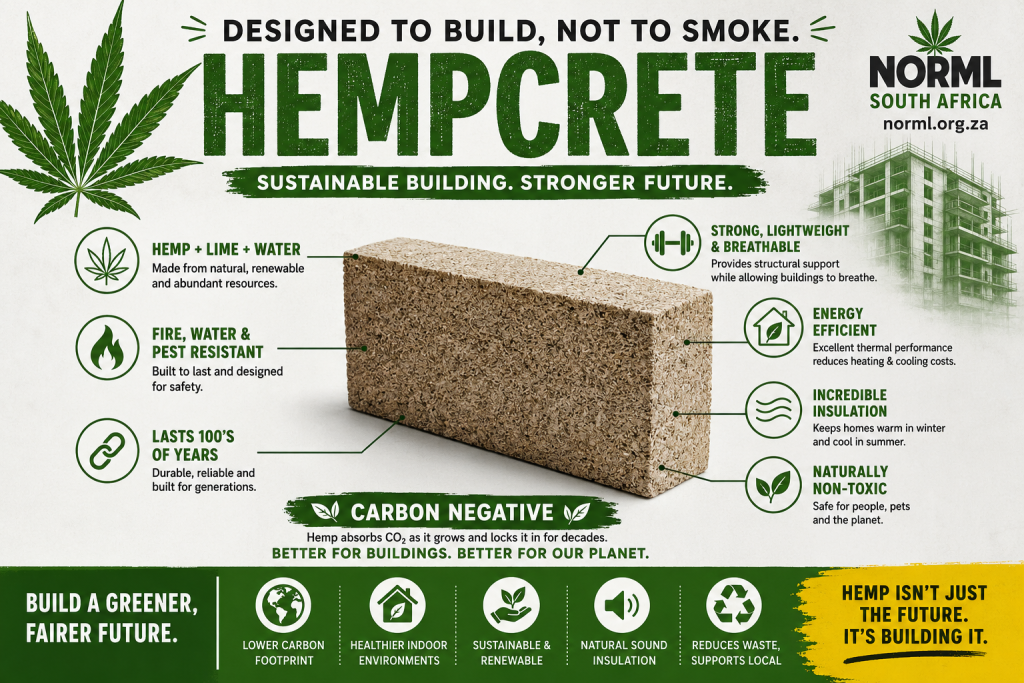
Some of its major advantages include:
Excellent Thermal Insulation
Buildings constructed with hempcrete maintain more consistent indoor temperatures throughout the year, reducing energy consumption for heating and cooling.
Carbon Negative Material
Industrial hemp absorbs significant amounts of carbon dioxide while growing.
When incorporated into hempcrete and protected inside a building, much of that carbon remains locked away for decades, making hemp one of the few building materials capable of storing carbon rather than producing it.
Fire Resistance
Despite being plant-based, hempcrete performs exceptionally well during fire testing because the lime binder protects the hemp fibres from combustion.
Moisture Regulation
Hempcrete naturally regulates humidity by absorbing and releasing moisture without encouraging mould growth.
Acoustic Insulation
The porous structure significantly reduces noise transmission, making it ideal for hotels, apartments and office developments.
The Current State of Hemp Farming in South Africa
South Africa’s hemp industry has undergone significant changes over the past several years.
Government has increasingly recognised industrial hemp as a legitimate agricultural crop capable of creating employment, stimulating rural development and supporting local manufacturing.
Pilot cultivation projects have expanded across several provinces, while licensing requirements have gradually become more accessible for commercial growers. Interest continues to grow among farmers looking for alternative high-value crops, particularly in regions suited to fibre production.
Industrial hemp offers numerous opportunities beyond construction, including:
- Textiles
- Paper production
- Animal bedding
- Bioplastics
- Bio-composites
- Building materials
- Food products
- Seed oil
- Cosmetics
Despite this progress, South Africa’s hemp industry remains in its early stages. Local processing infrastructure is still developing, meaning much of the potential value chain has yet to be realised. Continued investment in fibre processing, manufacturing facilities and research will be essential if the country hopes to compete internationally.
Why Hemp Could Transform Construction
The construction industry accounts for a significant share of global carbon emissions, with cement production alone responsible for a substantial percentage of worldwide CO₂ output.
Replacing even part of traditional masonry with hemp-based materials could dramatically reduce the environmental impact of future buildings.
Potential benefits include:
- Lower embodied carbon
- Reduced operational energy costs
- Improved indoor air quality
- Better insulation
- Lower lifetime emissions
- Greater sustainability credentials for developers
As governments introduce stricter environmental standards, materials like hempcrete are expected to become increasingly attractive for commercial and residential projects alike.
The Future of Hemp
The Hemp Hotel represents far more than an architectural achievement.
It demonstrates that industrial hemp has matured from a niche agricultural product into a versatile industrial resource capable of supporting multiple sectors of the economy.
Future applications are likely to include:
- Multi-storey residential developments
- Affordable housing projects
- Schools and universities
- Hospitals
- Government buildings
- Hotels and resorts
- Modular housing
- Carbon-neutral commercial offices
As cultivation expands and processing costs decline, hemp-based construction materials are expected to become increasingly competitive with conventional alternatives.
For South Africa, the opportunity extends well beyond architecture. A thriving hemp industry could create thousands of jobs across farming, processing, manufacturing, logistics and construction while positioning the country as a leader in sustainable building technologies.
The Hemp Hotel stands as proof that industrial hemp is no longer simply the crop of the future—it is becoming a cornerstone of modern sustainable construction. As cities around the world search for environmentally responsible building solutions, the skyline of Cape Town now offers a glimpse of what tomorrow’s buildings may look like.